Bitcoin
  Ethereum
  Tether
  BNB
BNB  XRP
XRP  USDC
USDC  Solana
  TRON
TRON  Lido Staked Ether
  Figure Heloc
  Dogecoin
  WhiteBIT Coin
  USDS
USDS  Hyperliquid
  Cardano
  Wrapped stETH
  LEO Token
  Zcash
Zcash  Wrapped Bitcoin
  Bitcoin Cash
  Binance Bridged USDT (BNB Smart Chain)
  Monero
  Wrapped Beacon ETH
  Chainlink
  Toncoin
  Canton
  Wrapped eETH
  Stellar
  MemeCore
  sUSDS
sUSDS  USD1
USD1  Dai
Dai  Litecoin
  Coinbase Wrapped BTC
  Avalanche
  Ethena USDe
  Hedera
  WETH
WETH  Sui
Sui  Shiba Inu
  Rain
Rain  USDT0
USDT0  PayPal USD
  Cronos
  Circle USYC
  Bittensor
  Tether Gold
  Global Dollar
  BlackRock USD Institutional Digital Liquidity Fund
  Ethena Staked USDe

Introduction: Why Understanding Bitcoin Matters in 2026
If you are searching for what is Bitcoin, it means you are trying to understand how money itself is changing. In 2026, Bitcoin is no longer just a buzzword from the internet or a topic limited to tech communities. It has become a serious global conversation involving governments, investors, banks, and everyday users.
Many beginners feel confused because Bitcoin is often explained using complex technical terms or exaggerated promises. The truth lies somewhere in between. Bitcoin is neither magic money nor a scam by default—it is a technology-driven financial system that works very differently from traditional money. This guide is written for complete beginners. By the end, you will clearly understand what Bitcoin is, how it works, why people use it, and what you should know before getting involved.
What Is Bitcoin? (Clear and Simple Explanation)
Bitcoin is a digital currency designed to work without banks or central authorities. It allows people to send money directly to each other over the internet.
Bitcoin:
- Exists only in digital form
- Is not controlled by any government
- Uses cryptography for security
- Operates on a decentralized network
Bitcoin was introduced in 2009 by an unknown person or group using the name Satoshi Nakamoto. Since then, it has grown into the largest and most recognized cryptocurrency in the world.
Why Was Bitcoin Created?
Bitcoin was created as an alternative to traditional financial systems. After the global financial crisis of 2008, trust in banks and centralized institutions dropped sharply.
The main problems Bitcoin aimed to solve were:
- Dependence on banks for money transfers
- Inflation caused by unlimited money printing
- High fees for international payments
- Lack of transparency in financial systems
Bitcoin introduced a system where rules are enforced by code, not institutions. This idea became the foundation of decentralized finance.
How Bitcoin Works (Beginner-Friendly Explanation)
Bitcoin works using a combination of blockchain technology, cryptography, and peer-to-peer networking.
What Is Blockchain?
Blockchain is a public digital ledger that records every Bitcoin transaction. Instead of one central database, thousands of computers maintain copies of the same ledger.
Each transaction:
- Is verified by the network
- Is grouped into a “block”
- Is added permanently to the blockchain
Once data is added, it cannot be changed. This makes Bitcoin transparent and resistant to fraud.
You can explore real-time Bitcoin transactions on tools like Blockchain.com or Mempool.space, which provide transparent blockchain data.
What Is Bitcoin Mining?
Bitcoin mining is the process that keeps the network running securely.
Miners:
- Verify transactions
- Add new blocks to the blockchain
- Protect the network from manipulation
In return, miners receive Bitcoin rewards. Mining is competitive and requires powerful computers, which is why professional mining operations exist today.
Mining also controls how new Bitcoins are released into circulation.
How Many Bitcoins Exist? (Scarcity Explained)
One of Bitcoin’s most important features is scarcity.
| Feature | Bitcoin |
|---|---|
| Maximum Supply | 21 million BTC |
| New BTC Creation | Through mining |
| Inflation Control | Built into code |
| Last BTC | Expected around 2140 |
Unlike fiat currencies, which can be printed endlessly, Bitcoin’s supply is mathematically limited.
Bitcoin vs. Traditional Finance: A Side-by-Side Look
To see Bitcoin’s value proposition clearly, let’s compare it to what we know.
| Feature | Traditional Finance (Banks) | The Bitcoin Network |
|---|---|---|
| Control | Centralized (Banks, Governments) | Decentralized (Global Network) |
| Access | Requires ID, Credit Check, Geography | Permissionless. Anyone with internet access |
| Operating Hours | Business Hours / Time Zones | 24/7/365. Never closes |
| Transaction Speed | Days for Int’l Wire Transfers | Minutes to an Hour (on-chain) |
| Transaction Fees | Can be High for Int’l Transfers | Variable, but often lower for value transfer |
| Money Supply | Unlimited (Can be Printed) | Capped at 21 Million |
| Transparency | Private, Opaque Ledgers | Public, Transparent Blockchain |
| Finality | Reversible (Chargebacks) | Irreversible (Like Cash) |
This table highlights the paradigm shift. Bitcoin isn’t just a new asset; it’s a new system with different rules.
Why Do People Use Bitcoin in 2026?
People use Bitcoin for different reasons depending on their goals.
Common Uses of Bitcoin
- Long-term investment
- Protection against inflation
- International money transfers
- Portfolio diversification
- Financial independence
In 2026, Bitcoin is also used by institutions, payment platforms, and even some governments for financial innovation.
Real-World Uses of Bitcoin in 2026
Bitcoin is no longer limited to online discussions or investment charts. In 2026, it is actively used in real-life situations where traditional banking systems feel slow, expensive, or unreliable.
One of the most common uses of Bitcoin is international money transfers. Sending money across borders using banks can take days and involve high fees. Bitcoin allows users to transfer value globally within minutes, often at a lower cost.
In countries facing high inflation or currency instability, people use Bitcoin as a way to protect their purchasing power. Instead of holding rapidly devaluing local currency, users prefer storing value in Bitcoin due to its limited supply.
Bitcoin is also increasingly used by freelancers and remote workers who work with international clients. Receiving payments in Bitcoin helps them avoid banking delays and currency conversion issues.
How Bitcoin Is Different from Other Cryptocurrencies
Many beginners think all cryptocurrencies work the same way, but Bitcoin is fundamentally different from most other crypto projects.
Bitcoin was designed with one primary goal: to be decentralized, secure digital money. Its development focuses on stability, security, and long-term reliability rather than frequent changes.
Other cryptocurrencies, often called altcoins, usually experiment with new features such as smart contracts, gaming, or faster transactions. While innovation is important, it also increases risk.
Bitcoin’s slower and more conservative development approach is the reason many people view it as digital gold, while other cryptocurrencies are seen as technology platforms or experiments.
Is Bitcoin Legal?
Bitcoin’s legality depends on your country.
- Legal and regulated in many regions
- Restricted or monitored in some countries
- Taxed as an asset in most places
Rules change over time, so beginners should always follow local regulations and tax guidelines.
Is Bitcoin Safe?
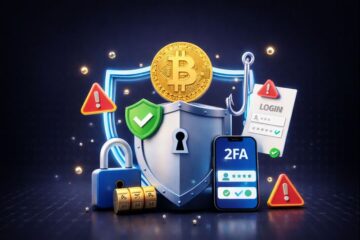
Bitcoin’s technology is very secure, but user mistakes are the biggest risk.
Common Security Risks
- Losing private keys
- Falling for phishing scams
- Using fake wallets or exchanges
How to Stay Safe
- Use trusted wallets
- Never share recovery phrases
- Enable two-factor authentication
- Avoid “guaranteed profit” schemes
Bitcoin security depends more on user behavior than on the technology itself.
Common Bitcoin Myths (That Beginners Believe)
Myth 1: Bitcoin Is Anonymous
Bitcoin transactions are public. Identities are not directly shown, but activity is traceable.
Myth 2: Bitcoin Is Only for Criminals
Most Bitcoin activity today is legal and transparent.
Myth 3: Bitcoin Is Too Late to Buy
Bitcoin adoption is still small compared to global finance.
Common Bitcoin Mistakes Beginners Should Avoid
Beginners often make avoidable mistakes when they first enter the world of Bitcoin. Understanding these early can save money and stress.
One common mistake is investing without learning. Buying Bitcoin only because of hype or social media trends often leads to poor decisions.
Another mistake is leaving Bitcoin on exchanges. Exchanges can be hacked or restricted, and users do not fully control their funds there. Personal wallets provide better ownership and security.
Many beginners also fall into emotional buying and selling. Bitcoin’s price can change rapidly, and reacting emotionally often results in losses.
Finally, trusting unknown platforms or “guaranteed profit” schemes leads to scams. If something sounds too good to be true, it usually is.
Risks of Bitcoin You Must Understand
Bitcoin is not risk-free.
Main Risks
- High price volatility
- Regulatory uncertainty
- Market speculation
- Technical mistakes by users
Beginners should never invest money they cannot afford to lose.
Should Beginners Invest in Bitcoin?
Bitcoin is not a shortcut to wealth. For beginners, education should come first.
Beginner-Friendly Advice
- Learn how Bitcoin works
- Start with small amounts
- Focus on long-term understanding
- Avoid emotional decisions
Bitcoin rewards patience and knowledge, not hype.
Key Takeaways (Quick Summary)
| Topic | Insight |
| What is Bitcoin | Decentralized digital money |
| Control | No central authority |
| Supply | Limited to 21 million |
| Security | Strong but user-dependent |
| Best approach | Learn before investing |
The Future of Bitcoin Beyond 2026
Bitcoin continues to evolve. With improvements in scalability, regulation, and adoption, Bitcoin’s role in global finance is becoming clearer.
Whether Bitcoin becomes a global reserve asset or remains a strong alternative system, it has already changed how people think about money, trust, and ownership.
Understanding Bitcoin today prepares you for the financial systems of tomorrow.
Bitcoin and the Future of Money
Bitcoin has sparked a global discussion about the future of money itself. As governments explore digital currencies and cashless systems, Bitcoin represents an alternative that operates without centralized control.
Unlike government-issued digital currencies, Bitcoin is open, permission less, and borderless. Anyone with internet access can use it without approval from an authority.
While Bitcoin may not replace traditional money completely, it is likely to continue existing as a parallel financial system—offering choice, transparency, and financial independence. Understanding Bitcoin today helps individuals prepare for a future where digital finance plays a larger role in everyday life.
Disclaimer: This article is for informational purposes only and is not financial or investment advice. Please conduct your own research and consult with a qualified professional before making any investment decisions.